History and Development Trends of Cylinder Bed Machines
Jun 06, 2023
Cylinder bed machines have a long history and have seen several development trends. Initially, they were primarily created for the textile industry in the early 19th century. These machines have undergone numerous modifications over time to accommodate diverse manufacturing requirements, and they now serve a crucial role in many industrial sectors.
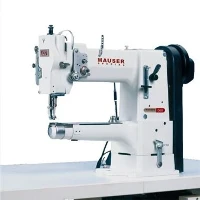
The term "cylinder bed machines" refers to specialized industrial sewing machines with beds or arms that are cylindrical in shape. These machines are capable of performing a variety of jobs, including straight, zigzag, and other decorative stitches. These machines' cylindrical form makes it easy for them to operate on tubular items like sleeves and cuffs, and their adaptability makes them helpful in a variety of industries like leatherworking, clothing manufacturing, and car upholstery.
Cylindrical bed sewing machine history
1. The first mechanical cylinder needle sewing machine was created by a German tailor named Balthasar Krems in 1810. However, an American inventor named Elias Howe didn't secure a patent for a comparable device until 1846. Howe's creation was the first useful machine, and the shoe and luggage industries both made extensive use of it.
2. A British inventor named William Jones created a machine that could stitch continuously without stopping in the late 1800s, revolutionizing the sewing business. A variety of specialized cylinder bed sewing machines, including ones with many needles and those capable of producing ornamental stitches, were produced as a result of this invention.

3. In the first decade of the 20th century, it advanced, adding capabilities like automatic thread tension control, adjustable stitch lengths, and the capacity to work with numerous threads at once. The machines became more accurate and efficient because of these developments, which sped up manufacturing.
4. It is now utilized in a variety of industries, including the production of textiles and clothing as well as automobile and marine upholstery. These devices are used in the automotive industry to produce personalized interiors, seat coverings, and other interior elements. They are employed in the marine sector to produce high-quality boat coverings and upholstery.
More intelligent and effective, sustainable development

The demand for greater industrial manufacturing productivity, accuracy, and versatility has motivated the development of cylinder bed machines. Technology advancements have made it possible for manufacturers to create more effective, intelligent machines that are capable of handling a larger range of activities. Modern sewing machines, for instance, have computerized controls that can manage sophisticated stitching patterns, such as those used on three-dimensional workpieces, making them perfect for creating detailed patterns on many types of materials.
The increased emphasis on sustainability is another tendency that has been seen in its development. More environmentally friendly devices that use less energy and generate less trash are being developed by manufacturers. For instance, some machines now provide the option of utilizing eco-friendly lubricants that cut down on waste and pollution.