How to choose Pfaff Industrial Sewing Machine?
Oct 22, 2024
Choosing a Pfaff industrial sewing machine requires a clear understanding of your sewing needs, the type of materials you'll be working with, and the machine features required for high-volume or heavy-duty work. Pfaff is known for producing durable and precision-engineered machines suited for a range of industrial applications, such as upholstery, leatherwork, and garment production.
Here's a guide to help you select the right Pfaff industrial sewing machine:
1. Purpose and Type of Work
Heavy-Duty Materials (Leather, Canvas, Denim): If you're working with thick materials like leather, canvas, or multiple fabric layers, you'll need a machine with high torque and power. Machines like the Pfaff 335 (cylinder arm) or Pfaff 1245 (flatbed) are designed for heavy-duty work and are ideal for upholstery, automotive interiors, and leather goods.
Garment Production: For sewing garments, look for machines that provide high speed, precision, and versatility, like the Pfaff 591 or Pfaff 574. These models are optimized for garment construction and sewing lightweight to medium-weight fabrics.
Specialty Applications (Shoes, Bags): If you are producing footwear or other specialty items, a cylinder arm machine such as the Pfaff 335 will offer the flexibility needed for sewing in tight spaces and handling curved seams.
2. Sewing Machine Type
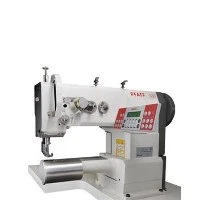
Cylinder Arm: For 3D objects like shoes, bags, and hats, choose a Pfaff 335 or similar cylinder arm model. It allows for easier sewing in narrow, hard-to-reach areas and is often used in leatherwork or upholstery.
Flatbed: For flat materials or garment production, a Pfaff flatbed machine like the Pfaff 1245 is ideal. This type is best for large or flat fabric pieces, making it the go-to option for upholstery, sails, and tents.
Post-Bed: If you're working on projects that require sewing raised or tubular shapes, such as boots or handbags, a post-bed machine like the Pfaff 918 provides better accessibility for specialized stitching.
3. Feeding Mechanism
Walking Foot (Triple Feed): A walking foot ensures even feeding of thick or layered fabrics, which is critical for heavy-duty sewing. Machines like the Pfaff 1245 come with a walking foot for better handling of thick materials and multiple layers.
Drop Feed or Needle Feed: If you're sewing lighter fabrics (garments or general fabric construction), a drop-feed system like that on the Pfaff 591 provides better control and precision on fine materials.
Compound Feed: For industrial applications where the fabric needs to be fed smoothly and accurately, choose a machine with a compound feed. The compound feed synchronizes the needle and presser foot movement for even stitching, even with tough fabrics.
4. Motor and Speed Control
Clutch Motor vs. Servo Motor:
Clutch motors are standard in many industrial machines and provide raw power at high speeds. However, they can be noisy and less energy-efficient.
Servo motors are quieter, energy-efficient, and allow for adjustable speed control. They're ideal for applications requiring both power and precision, as you can fine-tune the speed based on your material needs.
Speed: Consider the machine's maximum speed (stitches per minute). For example, the Pfaff 591 can reach high speeds (over 3,000 stitches per minute), making it suitable for fast-paced garment production, whereas slower machines with more torque may be better for heavy-duty materials.
5. Stitch Type and Versatility
Single Needle Lockstitch: The most common type of industrial sewing machine, it is suitable for general-purpose sewing, garments, and home decor.
Zigzag Stitch: If you need more stitch variety, such as zigzag for stretch fabrics, look for machines that offer this capability, like the Pfaff 463.
Bar Tacking, Buttonhole, or Overlock: For specialized sewing tasks (bar tacking, buttonholes, or overlocking), choose machines with these capabilities. Pfaff offers various models for each task, such as the Pfaff 577 (bar tacking) and Pfaff 487 (overlock).
6. Durability and Build Quality
Construction: Look for machines made with cast iron or heavy-duty metal parts for longevity and durability. Industrial sewing machines are built to withstand high usage in demanding environments, so it's essential to choose one with robust construction.
Low Maintenance: Some Pfaff industrial models come with self-lubricating mechanisms, reducing maintenance time and effort.
7. Work Area and Throat Space
For large projects (such as sails, upholstery, or tents), a machine with a larger throat space will allow you to maneuver larger materials easily.
Cylinder arm models are better suited for smaller or more complex projects, whereas flatbed models provide more surface area for larger or flat pieces of fabric.
8. Automation and Programmable Features
Programmable Machines: Higher-end Pfaff industrial machines offer programmable features like automatic thread trimming, backstitching, and digital stitch pattern selection. These features can save time and increase efficiency for high-volume production.
Electronic Controls: Machines with advanced electronic control panels allow for easy adjustments to stitch length, tension, and speed, making them more versatile for a variety of projects.
9. Noise and Workspace Considerations
Noise Level: Some industrial machines, particularly those with clutch motors, can be noisy. If your workspace requires a quieter machine, consider one with a servo motor.
Workplace Ergonomics: Choose a machine with features that support ergonomic comfort, such as knee lifts, thread trimmers, and easy access to controls, especially if you'll be working for long periods.
10. Budget
Entry-Level Industrial Models: If you're just getting started with industrial sewing or have a limited budget, consider basic models like the Pfaff 335 for leatherwork or light upholstery.
High-End Models: For businesses or high-production environments that require advanced features, precision, and durability, higher-end models like the Pfaff 1245 or Pfaff 574 offer more features and are built to handle intensive work.
Popular Pfaff Industrial Models:
Pfaff 335: Cylinder arm for leatherwork, bags, shoes, upholstery.
Pfaff 1245: Flatbed for heavy-duty materials like upholstery and canvas.
Pfaff 591: High-speed lockstitch for garment production.
Pfaff 463: Zigzag stitch for stretch fabrics or decorative work.
Pfaff 574: High-speed lockstitch for garment production, offering precision and speed.
Conclusion
When selecting a Pfaff industrial sewing machine, consider the type of materials you'll be sewing, the machine's feed system, motor, and special features needed for your projects. Whether you're focused on garment production, leatherwork, or heavy-duty upholstery, Pfaff offers a range of machines designed for both precision and durability. Matching the right machine to your specific needs will ensure efficient, high-quality results in your industrial sewing tasks.
If you need to purchase an JUKI Sewing Machine, you can choose DAPSEW. The brand we cooperate with is the JUKI brand.
you can contact:
Email: sales@dapsew.com
WhatsApp: +8613186027908