How to Deal with Thread Breakage in Double-Needle Sewing Machines?
Sep 14, 2023
One common issue encountered with double needle sewing machines, especially the left needle, is thread breakage. This occurs because the rotation direction of the left rotary hook happens to untwist the left thread. Therefore, theoretically, the left needle should use right thread to minimize untwisting. However, right-thread tends to be more expensive, and most apparel businesses primarily use left-thread. This necessitates adjustments to the machine to suit production needs.
For older machines with extensive usage, start by inspecting whether there are any damaged thread grooves in various threading areas, such as the thread take-up lever hole, feed dog hole, needle plate, etc. If any damage is found, promptly repair or replace the affected parts.
Check the synchronization of the machine needle and feed the dog. The standard position is when the arrow on the lower shaft synchronous pulley lines up with the marking on the machine casing. At this point, the needle tip should just touch the needle plate surface, and the feed dog and needle plate should be at the same height. This synchronization is crucial. If it's off, remove the synchronous belt, adjust the pulleys, and then reinstall the synchronous belt to the standard position. If adjusted correctly, when the needle is at its lowest point, pressing the reverse sewing lever should not cause the needle bar to move. Also, adjust the needle bar to the lowest point, remove the synchronous belt, move the lower shaft until the feed dog does not move, and then reattach the synchronous belt.
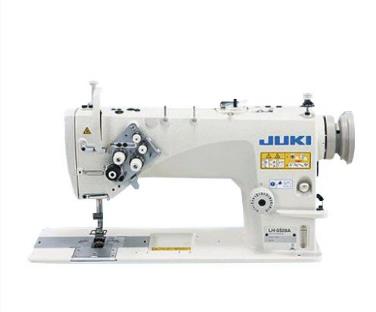
Adjust the left rotary hook bed. When the needle rises 2.5-3 millimeters from its lowest point, the rotary hook point should align with the center of the needle and be 1.0 millimeters above the needle's eye. Adjust this by altering the rotary hook's position and the up-and-down position of the needle clamp.
As the double needle sewing machine needle enters the feed dog hole, it should be centered in the feed dog hole. Thoroughly inspect the feed dog hole and needle plate threading area for any scratches. Ensure that there is a 0.5-1.0 millimeter gap between the needle plate threading gap and the inner shuttle positioning pin to allow smooth thread passage. If the gap is too small, the thread may not pass smoothly, and if too large, the needle plate won't securely hold the inner shuttle positioning pin, causing misalignment.
After adjusting all mechanisms correctly, thread the machine with the appropriate thread. Maintain moderate tension on the thread guide spring on the thread take-up lever. Place a piece of fabric under the presser foot and manually turn the pulley to observe whether the thread moves smoothly within the rotary hook. When using heavy threads like 30/3-type, consider trimming any protruding tails from the moon ring to allow the thread to move smoothly within the rotary hook, aiding in thread pickup. When using heavy threads, it's recommended to use a heavy-duty rotary hook and adjust the open-close timing according to the thread requirements.
When sewing thick fabrics, the machine needle may generate heat, and in severe cases, it might smoke or burn the thread. In such instances, you can use silicone oil to cool the needle or reduce the sewing speed as needed. During actual maintenance work, make appropriate adjustments based on the specific fabric and process requirements.
By following these steps, you can effectively address thread breakage issues in double-needle sewing machines.
If you need to purchase a double needle sewing machine, you can choose DAPSEW. The brand we cooperate with is the Juki Sewing Machine.
you can contact:
Email: evan@dapsew.com
WhatsApp: +8613186027908