Purpose and Classification of Interlock Sewing Machines
Jan 12, 2024
I. Purpose of Interlock Sewing Machines
An interlock machine is formed by the cooperation of two or more needles and one looper to create a 400-series multi-thread chainstitch or 600-series coverstitch. its biggest feature is that no matter how many needles it has, there is only one looper. The looper thread loops through all the needle threads, forming a latticed structure on the reverse side of the seam. This is the biggest difference from a chainstitch machine. The main characteristic of an interlock stitch is its flat, latticed appearance that covers the fabric edge well, preventing fraying. Therefore, in addition to good elasticity, stretch, and strength, these stitches also effectively prevent fabric unraveling while providing decorative effects.
II. Classification
With the advancement of science and technology and improved living standards, knitwear varieties are increasing, as are demands for sewing quality. To meet the needs of sewing different varieties and parts of knitwear, interlock sewing machine varieties and functions are also improving. Different classification methods divide them into different types. Currently, there are two main methods:
1. Classification by machine shape
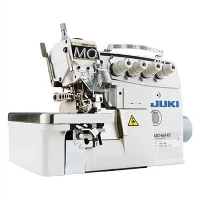
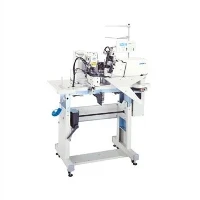
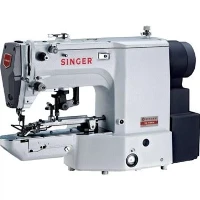
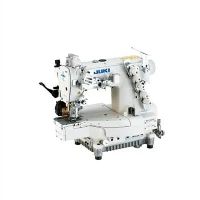
Based on shape, they can be divided into flatbed and cylindrical types. Flatbed types have a wider fabric support area, suitable for larger parts or joining flat pieces like attaching knitwear hems or crotch seams. The cylindrical type has a narrower cylindrical fabric support, suitable for smaller tubular parts like sleeves or collars.
|
|
|


2. Classification by number of needles and threads
Based on the number of needles and total threads, common types include 2-needle 3-thread, 3-needle 4-thread, 3-needle 5-thread, 3-needle 7-thread, and more. For interlocks without decorative threads, the total thread count is always one more than the needle count because there is only one looper. So the needle and thread counts indicate whether decorative threads are present. If the total thread count exceeds the needle count by only one, there are no decorative threads, forming a 400-series stitch with latticing only on one side. If the total thread count exceeds the needle count by more than one, decorative threads are present, forming a 600-series stitch with latticing on both sides. Decorative threads on interlocks are typically 1-3.
If you need a purchase solution for an Interlock Sewing Machines, you can choose DAPSEW, The brands we work with are SINGER and JUKI.
you can contact:
Email: evan@dapsew.com
WhatsApp: +8613186027908!