The Function and Classification of Lockstitch Sewing Machine
Jan 17, 2024
I. Function of Flatbed Sewing Machines
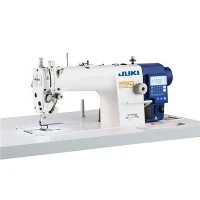
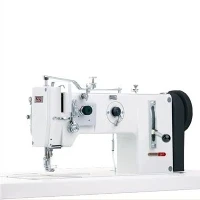
Flatbed sewing machines, also known as lockstitch sewing machines, are colloquially called "flat machines" in factories. In garment factories, they are often called "collar attachment machines" because they are frequently used to attach collars. Flatbed sewing machines use a linkage to pick up the top thread and a shuttle hook to catch the bottom thread, forming a class 300 lockstitch. From the exterior shape of the sewing head, flatbed sewing machines generally have a flat bed. In knitwear garment production, flatbed sewing machines can perform various sewing processes such as splicing and stitching. They are the most widely used sewing equipment in garment factories for knitted fabrics and are also extensively used for sewing leather and non-woven fabrics. However, because the lockstitch formed by a flatbed machine has low elasticity and limited stretch, and cannot effectively prevent run-off of stitches at the edges of knitted fabrics, flatbed machines are mainly used as auxiliary equipment in knitwear garment production. They are often used for processes requiring flat, non-stretch seams, such as attaching facings, labels, and pockets.

II. Classification
There are many types of lockstitch sewing machines which can be categorized in different ways according to need. The most common classification methods are:
1. By Sewing Speed
Based on the sewing speed during the stitching process, flatbed sewing machines can be divided into low-speed, medium-speed, and high-speed.
2. By Number of Needles
The number of needles indicates the amount of straight needles on the flatbed machine. Based on the number of needles, flatbed machines can be categorized as single-needle or double-needle. In knitwear production, single needle flatbed machines are mainly used for attaching collars, labels, pockets, and facings which require flat, non-stretch seams. Double needle flatbed machines can simultaneously produce two rows of evenly spaced lockstitches in one pass, which is useful for processes requiring two parallel rows of stitches such as double-needle ribbing on sportswear or casualwear. This not only reduces labor intensity but also improves efficiency and seam quality.
3. By Feed Method
Based on the fabric feeding method, flatbed sewing machines can be divided into bottom-feed, front/back alternating feed, top/bottom alternating feed, needle feed, and compound feed types. High-speed single needle alternating feed flatbed machines have adjustable top and bottom feed lengths. When the top and bottom feed lengths are very different, gathers can be formed. So this type of machine can easily produce shirring effects.
4. By Control Method
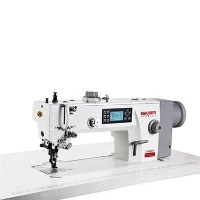
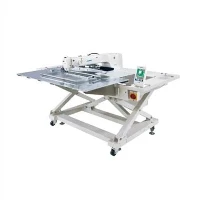
Based on the control method, flatbed sewing machines can be divided into manually operated common flatbed machines and computerized automatic flatbed machines. Examples of computerized automatic flatbed machines include auto-trim, auto-reverse stitch, auto-presser foot lift, etc. Computerized sewing machines can improve efficiency and reduce worker fatigue.
5. By Fabric Thickness
Based on the fabric thickness suitable for sewing, flatbed machines can be categorized as light, medium, heavy, and extra heavy duty. Some brands use letters after the model number to indicate suitable fabric thickness. For example, Juki uses NA for light, N for medium, NH or NL for heavy duty.
In addition to the above classification methods, modern high-speed sewing machines have many automated features such as auto-oiling, auto-threading, auto-trimming, auto-reinforcement stitching, and auto presser foot lifting to improve productivity and seam quality. For example, Juki's high-speed single needle lockstitch sewing machines have auto-trim and needle stop functions so the operator does not need to manually trim threads and can keep their hands on the fabric at all times for efficiency and quality. There are also reverse stitch switches near the needle so the operator can backstitch without moving their hands.
If you need a purchase solution for a single needle lockstitch sewing machine, you can choose DAPSEW, The brand we work with is JUKI. you can contact Email: evan@dapsew.com WhatsApp: +8613186027908!